The draconian laws had been overturned; finally, the people of Israel could rest easy, as reasoned by both the traditionalist Ḥassidim and the Hellenized Judeans who had viewed the empire’s coercive policies as actually being good for the Jews.
Only one stubborn group remained committed to deeper principles.
They weren’t resisting the oppressive policies of the empire like the Ḥassidim, but rather its very presence in Judea. They opposed the Seleucid-Judean relationship in its essence.
The hardline Maccabi faction, heroes of the Ḥanukah story, may have an important lesson for us today, as Israel’s relationship with today’s dominant empire enters a new chapter, full of opportunities and challenges.
Many of the thinkers and organizers leading the Vision movement have struggled for roughly two decades to move the public discourse toward a more critical understanding of United States aid to Israel.
Leaving a paper trace that goes back years in various iterations, we’ve met scorns of dissuaders insistent that Israel couldn’t survive without American money, that the aid is in the interests of both countries, or that it is a symbol of the deep bonds shared by our two nations.
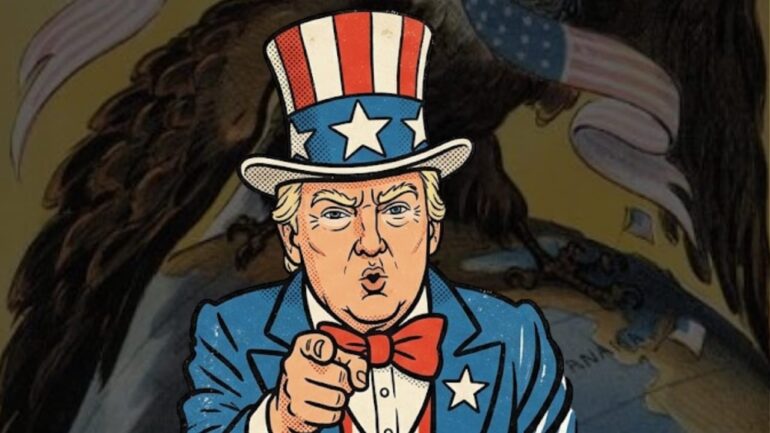
In a possibly positive sign, all of those claims evaporated right after US President Donald Trump announced that his administration intends to end the $3.8 billion annual aid package to Israel.
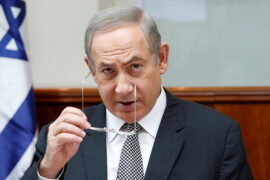
This bombshell announcement came on the heels of Israeli Prime Minister Binyamin Netanyahu’s efforts to gain military and economic independence from the empire—though possibly skirting Netanyahu’s desired timeframe (reportedly taking Israel’s finance ministry by surprise).
While it might seem as though Trump’s announcement actually cured Israel of a once-existential fear, it could be that so many have confused the symptom (economic dependence on Washington) with the root problem – an Israeli identity crisis casting us as Uncle Sam’s sidekick.
Many of the pundits who didn’t oppose the aid in the past now celebrate Israel’s independence with the prospect of a truer and fairer relationship with Washington. Partners, not junior partners.
As those who once scorned celebrate—a remarkable testament to the incremental progress that was made (while connected to a sense of vulnerability US Jews haven’t experienced for roughly a century)—it would be wise to take stock and evaluate where this leaves us.
After decades of Jews making the case that the aid package advances US imperialist interests (a true claim), as well as increases Washington’s soft power with what Alexander Haig once called “America’s unsinkable aircraft carrier,” the abrupt announcement should be met with more vigilance than optimism.
It’s hard to imagine how this advances US interests at all, seemingly relinquishing a lever of control lorded over Jerusalem, as well as shutting the taps on the American arms industry. Still, for the sake of analysis, it’s worth assuming that Trump could actually follow through with this.
On the one hand, we see Israel gaining greater materially independence from the United States — with serious potential for deeper psychological liberation as well.
On the other hand, The people of Israel may not be politically mature enough not to confuse this fight for the war itself. While US aid was one obvious lever, we should be vigilant regarding other levers arising in its absence.
Since his first term in office, Trump’s doctrine has been an overt rejection of soft power in exchange for more direct, transaction-based, military control. Does Israel’s disengagement from the empire foreshadow an attempt for more overt US imperialism via the so-called Board of Peace? Are other levers of control on the table?
Any serious analysis of US foreign policy would have to address how Washington’s leverage could potentially evolve. It’s unlikely to simply disappear.
There’s also the timing of this announcement. Just before Vice President J.D. Vance’s explicit enunciation of Washington’s relationship with Jerusalem, as a scapegoat for the “blue tsunami” that thrashed the Republican party this week, Trump’s timing indicates a tacit agreement with his vice president – and an equal willingness to throw Jews under the bus if it could win the Republicans some congressional and senatorial seats.
While Trump’s announcement was merely that, it would be wise for Israel’s leadership to exploit this moment to make us a little freer from US dominance. The struggle for independence isn’t over. So yes, build factories, develop weaponry in-house, create those jobs, but let’s not assume that Washington’s influence and interference is over.