In a recent interview with Dr. Mordekhai Kedar regarding Israel’s upcoming elections, Rav Oury Cherki explained that the electoral strength of the opposition parties is based on a critical truth in their political narrative that any governing coalition must take into account.
Rav Cherki challenged Kedar’s framing that the current coalition sees reality as it is while the opposition is still stuck in the misguided “konseptzia” (“conception”) that led to the disastrous Hamas-led invasion of southern Israel on Simḥat Torah of 2023, and pointed out that Israel’s national camp lacks a clear vision, preferring to say what it opposes rather than what it supports, which makes it harder both to win elections and to govern.
On the other hand, Rav Cherki insisted that there’s a grain of truth in the opposition’s political narrative, specifically their fear of losing personal freedoms in the face of a “halakhic state,” a Ḥaredi takeover, or the rise of a Jewish ethno-state that systemitize s the mistreatment of Palestinians.
The Rav’s main point was that if coalition parties, or their supporters, could express a clearer vision for the type of society they want Israel to be, while taking into account the fears of the opposition, they would be far more successful in both winning elections and governing with broad public support.
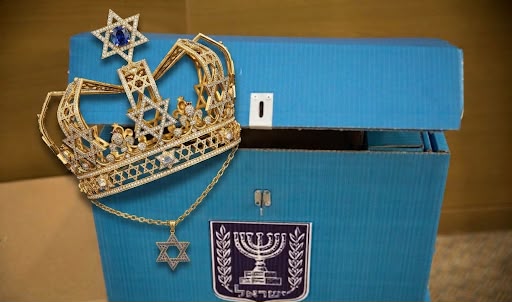
This discussion is especially relevant this week, as we read Parshat Shoftim, which lays out the various state institutions (courts, monarchy, priesthood) of the ideal Jewish state.
In his commentary on Shoftim, Rav Cherki dives into one of the oldest and most poignant debates in Jewish statecraft.
In regards to the verse, “When you come to the land which HaShem your G-d gives you and possess it and dwell in it, and you say, ‘I will set a king over me like all the nations around me,’ then appoint a king over you whom HaShem your G-d will choose…” the sages of the Mishna had already debated whether it’s a Torah commandment to establish a monarchy as an expression of the Divine ideal (Rabbi Yehuda) or if it’s a less-than-ideal result of the nation’s poor decision making (Rabbi Nehorai).
This debate continues for over a millennium, with Rambam, Ramban, and Sefer HaḤinukh adopting Rabbi Yehuda’s position, and Rav Sa’adya Gaon, Sforno, and Abarbanel favoring Rabbi Nehorai’s position – going so far as to compare the demand for a king to eshet yefat toar.
Rav Cherki interestingly quotes the Netziv of Volozhin, who insists that even for those who hold that monarchy is a commandment, and not just one of many options, the commandment can only be performed if and when the people genuinely want a king.
Rav Cherki also noted the opinion of HaRav Avraham Yitzḥak HaKohen Kook that while a monarchy is the ideal, the degree of the monarch’s actual authority is based on the stature of the nation – a weak and feeble people might need a more authoritarian leader, whereas a nation of strong upstanding individuals is better served by a more symbolic monarch that simply represents the collective will.
It’s interesting to note that in recent weeks the question of the political leadership’s responsiveness to the public will has been at the center of online election discourse. Yair Golan’s Democrats (Demokratim) party held open primaries last month, while the Religious Zionism party held closed primaries among the faction’s official electors a week later, and debates raged whether the engineered diversity and equal representation of the Democrats or the limited participation and reserved spots for hand-picked candidates of Religious Zionism were less democratic, and undermined the will of the people to a greater degree.
Prime Minister Binyamin Netanyahu’s Likud party has the largest primaries (which more closely resemble the system of the Democrats than Religious Zionism – but with less social engineering and more reserved spots) and as its campaigns ramp up, Hadar Mukhtar has been making headlines. In the previous elections, she led the “Youths on Fire” party that failed to pass the electoral threshold, and she ultimately decided to join Likud, leading their outreach to young voters on social media.
But after campaigning tirelessly to recruit the 18-25 demographic, she was informed this week that due to a lack of sufficient “seniority” in the party, she would not be allowed to run in the primaries. Some commentators have called this out as proof that the Likud leadership is uninterested in engaging with young voters and adapting itself to serve their interests.
In contrast, Naftali Bennett’s Together party has been actively pursuing a public image of being on the ground listening to voters.
Every few days, Bennett’s campaign releases a new video of him sitting around with a group of middle aged and elderly men at a falafel shop somewhere in the Israeli periphery, Likud party strongholds, speaking about politics, his record as prime minister, and his plans for the next government.
Finally, the question of the electoral threshold is once again on the table.
As the Palestinian parties move forward with political unions to avoid losing seats to the threshold, smaller parties in the “national camp,” like Moshe Feiglin’s Zehut party and Avi Maoz’s Noam faction are coming under fire for endangering the electoral chances of the coalition. They and their supporters have responded that the thousands of voters that they represent also deserve to have a voice, and that forcing everyone to support “lowest common denominator” parties like Likud is undemocratic.
Across the board, just like in the rabbinic debate over monarchy, the difficult balancing act between central authority and adherence to the will of the people is one of the key factors in Israel’s election cycle. And as Rav Cherki warned, any party or coalition that fails to meaningfully engage the public and its concerns while advancing its vision for the future will be hard pressed to make a lasting difference in Israeli society.