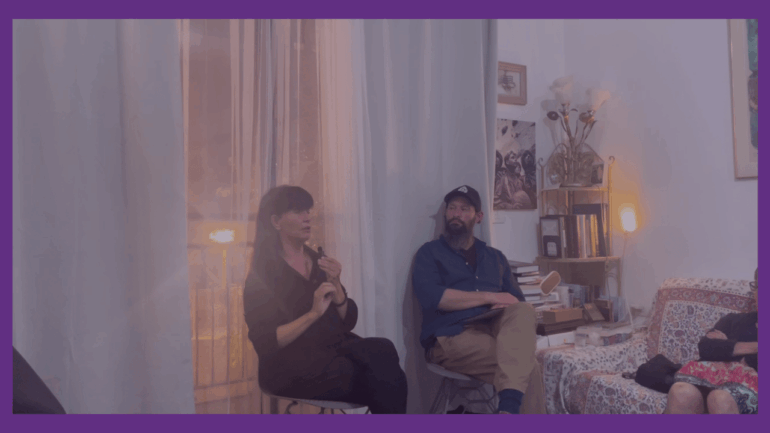
For the fourth in our Israel Elections: The Candidates & Their Visions for Israel’s Future series, I moderated a discussion with former lawmaker and Oz party leader Dr. Einat Wilf in Jerusalem.
On the one hand, I found Wilf to be highly professional and experienced at campaigning, clever enough to dodge difficult questions by pivoting to her pre-prepared soundbites (even in response to questions for which these soundbites were barely relevant). While being able to respect her skill as a politician, I regret that she avoided what could have been a serious and substantive conversation about rival visions for the nation’s future and Israel’s place in the world.
She also seemed to be in denial about certain realities, like Israel’s demographic trajectory and the lived experiences of oppression that motivate Palestinians to fight against Israel. When it came to these issues, she tended to stay in the intellectual shallow end of generic Hasbara and G-rated narratives casting Zionists as perpetual good guys in a century of conflict. When it comes to these generic Zionist narratives, it must be said, Wilf is one of the best spokespeople on the international stage.
On the other hand, however, she impressed me more than I expected her to. Especially in regards to her understanding of how harmful Israel’s relationship with the United States has been for us. On this issue, I was genuinely surprised by the depth with which she grasped the problem, not just on the military, economic, or diplomatic level but even in the realm of culture and ideology.
Her new book, Peace Not Now (which she left as gifts to the audience), even went so far as to connect the US-Israel relationship with Israeli neoliberal privatization policies and increased individualism at the expense of the more collectivist attitudes championed by the Zionist ideological tendencies that characterized the State of Israel’s early decades.
If I had to summarize Wilf’s overall message, it would be that Zionism is just and that Israel’s enemies are wrong, but that “first Israel” (the country’s westernized ruling class) needs to grow up and take tighter control over the sectors (Ḥaredim, national-religious Jews, Palestinians, etc.) that threaten what she believes the State of Israel should be.
The goal of this series is for olim (Jews who’ve “ascended” home to Israel from the exile) to engage with candidates from Israel’s various political parties to learn what they stand for, what issues they see as currently most pressing, how they understand the criticisms against them and what they envision for Israel’s future.