There are three ways to enter the Holy of Holies in the Temple.
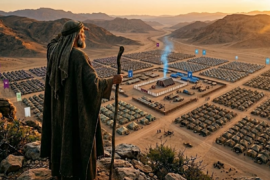
One is to be like our teacher Moshe, who went into the holiest place without any special preparation – not wearing priestly garments, without bringing korbanot, and without any need to send a goat out into the wilderness.
Moshe is the ideal model of a man without any blemish. He has no need to mend anything before entering, and he simply hears the word of the Creator emanating from between the two Kruvim.
The second way is to be like Aharon HaKohen, and to perform the holy service described in the Torah portion of Aḥarei-Mot.
Aharon, whose function is to bring those far away closer and to correct their distortions, is permitted to enter the holiest place if he does all that is necessary to remove the obstacles created by the transgressions of the people. He raises up the forces of life, symbolized by a bull, and separates between the tempestuous forces of the soul which are worthy of joining the holiest forces, as symbolized by the goat that is sacrificed, from the aspects of that force which must be discarded from the soul, symbolized by the goat that is sent away.
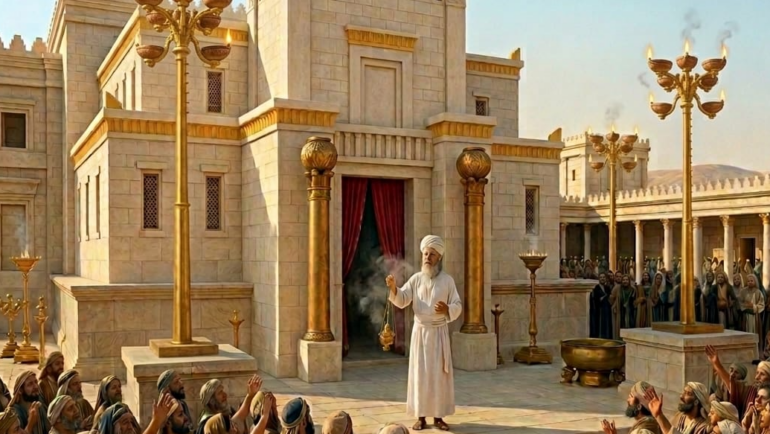
The third way to enter the Holy of Holies is that of the High Priests throughout subsequent generations.
Any kohen who is not Aharon himself but who has inherited his status must take advantage of a unique time that will make it easier for him to carry out the burden of atoning for Israel’s transgressions. This happens once every year on Yom Kippur, which is a time when atonement is especially relevant.
The yearning for sanctity – the desire to reunite with the Source of all life – is a constant urge within the human soul. This impulse carries some danger, as can be seen in the deaths of Nadav and Avihu.
Aharon’s name is emphasized in the description of the labors performed in the Temple: “Speak to Aharon… Let Aharon give… Let Aharon sacrifice,” and more. But in the description of entering the Holy of Holies, Aharon’s name does not appear. “Let him take a full pan… Let him bring… Let him put the incense… Let him sprinkle the blood…” and so on.
This is very puzzling, especially in view of the fact that no one else is allowed to be at the site with him.
“Let no man be in the Tent of Meeting, from when he comes to atone in the Sanctuary until he leaves.” (Vayikra 16:17)
The only person that is there at this time is Aharon!
The answer to this question must be that at this moment Aharon loses his identity as a result of the experience of submerging into the Sh’khina. This is a temporary loss of identity in deference to the place where Divine revelation takes place. But if that is the case, there is a distinct possibility that the Kohen Gadol might not want to return to our world, after he has sampled the incredible feeling of his own insignificance in relation to the Sh’khina.
Such spiritual elevation brings supreme pleasure to the High Priest, but it is not good for the people who sent him on a mission to bring down blessing to our world from the Source of all life. And that is why it is written in the Zohar HaKadosh that a rope would be connected to the High Priest’s foot, so that he would not forget the material world that he had been sent to fix.
This is why the peak of the Yom Kippur experience is when the Kohen Gadol leaves the Holy of Holies and not when he enters: “How wonderful it was for the High Priest when he left the holy area in peace.” (Yom Kippur Mussaf Amida)