The Torah concludes in such a way that leaves us with a sense of anticipation.
Moshe departs our world without participating in the completion of the Divine plan for the tikkun (correcting) of the entire world – the establishment of a Hebrew kingdom in the land of Israel and the building of the Temple in Jerusalem.
There’s a deep sense of disappointment. Moshe’s successor simply doesn’t measure up to his teacher’s stature.
“The face of Moshe is like the face of the sun, the face of Yehoshua is like the face of the moon.” (Bava Batra 75a)
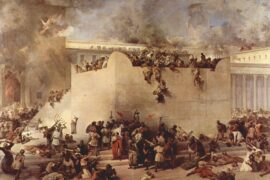
The sense that a historical opportunity has been missed — the possibility that the era of Moshe might also have been the era of the Mashiaḥ — repeats itself several times throughout the nation’s history, like the postponement of the building of the Temple from David to Shlomo, the fall of Yoshiyahu at the Battle of Megiddo, the untimely passings of the Arizal, the Ramḥal, and HaRav Avraham Yitzḥak HaKohen Kook, and many others.
There appears to be a pattern within Divine providence that presents an opportunity to bring history to its completion, but is then ultimately deferred to a later time for one reason or another.
One possible explanation is that there is an inherent problem that manifests in every great leader, in that his dominant stature casts a colossal shadow over less powerful forces that must also be expressed in order to complement the leader’s strengths.
Had Moshe done it all by himself, the Torah would have been completed.
“Had Israel not sinned, they would have received only the Ḥamisha Ḥumshei Torah and Sefer Yehoshua.” (Nedarim 22b)
There would have been only six books of the TaNaKh, with the sixth revealing the sanctity inherent in nature — the sanctity of the land of Israel.
Yet this would have required the suppression of everything that lies beyond Moshe’s personality, restricting the nation of Israel’s full expression. We already saw a hint of this at the waters of Meriva, when Moshe sought to bend reality to his will by hitting the rock with his staff. This is the root of the flaw of excessive strictness that sometimes accompanies the Torah’s guidance, which will ultimately be rectified in the end of days (see Orot HaKodesh IV, p. 222).
The final words that Moshe hears from HaShem are unbearably harsh.
“You shall see it with your eyes, but you shall not cross over. And Moshe died there.” (D’varim 34:4–5)
The Torah remains incomplete, and the task of the generations following Moshe, including our own, is to manifest and illuminate all of the powerful ideas hidden in the depths of the Torah of Moshe.
Our generation has the great fortune to be standing at an historic moment, faced with major decisions that have the potential to complete the process of tikkun olam (correcting the world).
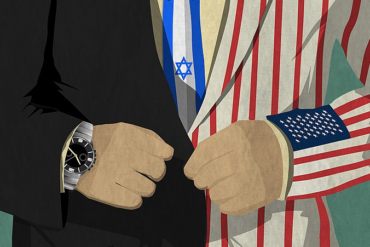
We have already begun, with help from the Creator, through the establishment of the Jewish state, the ingathering of our exiles, the unprecedented strengthening and expansion of Torah study, populating and developing the land, and an ideological/spiritual/cultural revival—all of which will ultimately contribute to the tikkun of all humanity, which will – as a result of Israel’s successful national rebirth – desire to know HaShem.
Translation by Aryeh Shapiro