Parshat Tetzave opens with a command: “And you shall command the children of Israel.”
Here we encounter a “second version” of the instructions to construct the Mishkan (Tabernacle).
In the previous Torah portion, Parshat T’ruma, the work of the Mishkan relied on the spontaneous generosity of every individual within Israel; for this reason, the Kehuna (Priesthood) was not mentioned there. This is because one who is pure in soul and complete in intellect doesn’t require an intermediary to approach the Divine.
In our portion, however, the Torah addresses those who are liable to sin, and who require instruction to ensure their approach to HaShem is complete. Such a person requires something that will have a profound impact on their imagination. The priestly garments, which are intended “for honor and for glory,” are designed to act upon the “negative imagination,” purifying it and transforming it into a force of “pure imagination.”
Similarly, at the beginning of the following portion (Ki Tisa), the Kiyor (Basin) is mentioned as a continuation of the command for the Mizbeaḥ HaK’toret (Incense Altar) in our portion. Neither the Kiyor nor the Mizebeaḥ HaKt’oret appear in Parshat T’ruma, since their construction evokes the Yom Kippur service, which is built upon the premise that man may stumble into sin.
As noted, the work of the Mishkan in Parshat Tetzave differs from that of Parshat T’ruma. It addresses the individual who has lost the natural spontaneity of their approach toward the Divine, and who should be strengthened through mitzvot.
Tetzave teaches us that even those who are liable to sin are included within the framework of kedusha, and should not despair if they have lost their unmediated connection to HaShem. The possibility of approaching the Kodesh remains intact, yet it requires a connection to the Kohanim, who are uniquely qualified to serve as an intermediary.
The Korban HaTamid (the Continual Offering) also appears for the first time in our portion. The essence of the Tamid is the revelation of the constant flow of holiness within Am Yisrael. Its consists of four components: Korbani (My offering), Laḥmi (My food), L’Ishai (for My fire-offerings), and Re’aḥ Niḥoḥi (My pleasing aroma).
- Korbani: Signifies the closeness of the Israelite soul to the Creator.
- Laḥmi: Represents the connection to the natural earthly dimensions of the nation, just as bread serves as the staple of sustenance.
- L’ishai: An expression of the sanctity of the nation’s actions, represented by fire — the primary active force of civilization.
- Re’aḥ Niḥoḥi: The delight arising from the totality of the Divine service.
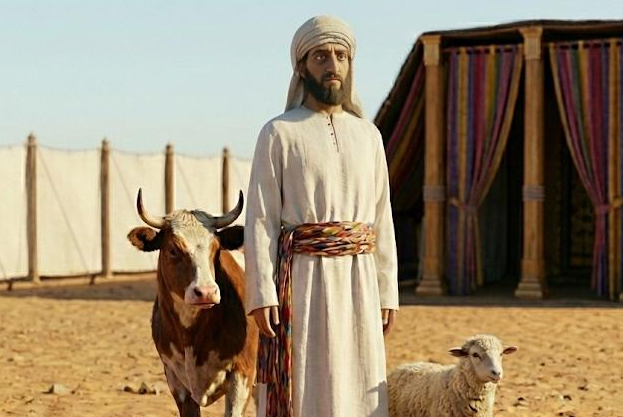
The Korban HaTamid is a lamb—a quiet animal that corresponds to the material character of Israel which, in its established form, is not destructive. This stands in contrast to the bull, an animal prone to goring, which atones for the destructive tendencies of the material.
The Tamid offerings are yearlings, reflecting the “softness” of the Israeli material, and are unblemished, because the service has the power to elevate all of life’s inclinations. One is offered in the morning and one in the evening, so that the Divine flow continues around the clock, day and night.
The fine flour for the meal offering and the wine for the libation sanctify the natural power of growth (flour) and the joy of life (wine).
Finally, oil is mixed with the flour, preparing the deeper nature required to ascend to the nobility of life.
Translation by Aryeh Shapiro