
Since the announcement of the ceasefire deal between Israel and Iran, brokered by the United States and Qatar, Israelis across the political spectrum have been expressing mixed feelings regarding the abrupt cessation of operations in Iranian airspace.
For many, it felt as if we were on the verge of an historic breakthrough, posed to topple a regime that has for decades threatened Israel with annihilation.
This frustration doesn’t come from a sense of failure, but rather from a fear that once again Israel will fail to learn the necessary lessons from our success.
Yet despite this, it remains important that we not lose sight of Israel’s unprecedented accomplishments in this campaign and recognize the hidden blessings in this frustrating development.
Iran’s nuclear program, military, and Islamic Revolutionary Guard Corps (IRGC) have been decapitated, with the elimination of over 45 senior military personnel and nuclear scientists.
Additionally, Israel’s air force struck over 1,250 military targets, while intercepting over 500 rockets and over 1,000 UAVs.
Such astonishing accomplishments are a testament to the overwhelming military superiority that Israel has built up in recent decades, in preparation for just such a conflict, but they also reveal the Divine providence guiding Israel to victory, with zero casualties to our pilots, and a miraculously low – yet still tragic – number of only 28 civilian casualties on the home front.
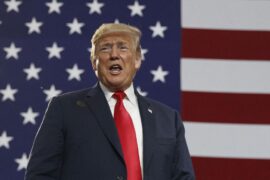
While it would have been more impressive for Israel to have taken out the nuclear facilities in Fordow, Natanz, and Isfahan without US intervention, we shouldn’t sell ourselves short and accept a narrative that the campaign was won by US President Donald Trump and his B2 bombers.
It’s abundantly clear that the United States only joined the campaign once Israel had already done most of the hard work of neutralizing the Iranian air force and air defense systems, and only once it was clear to everyone involved that Jerusalem was ready to complete the job without Washington’s help, one way or another.
But we can’t rest on the laurels of our victory without learning the necessary lessons.
While some celebrate Trump for helping Israel finish the job, and others criticize him for getting involved in a war he should have stayed out of, it’s still clear to the average Israeli that America’s involvement wasn’t a favor to Israel, but rather a calculated pursuit of US interests.
Rather than letting Israel complete the campaign alone, solidifying our status as the undisputed regional hegemon and deepening the sense in Israel and across the region that Israel’s dependence on Uncle Sam is receding, Trump took an easy public relations win that allows him to flaunt America’s continued relevance in maintaining the stability of the Middle East, both through destroying Iranian facilities with exclusively American equipment, and through strong-arming both sides into a ceasefire shortly thereafter.
It’s comically apparent from Trump’s social media posts that he is positioning himself to receive the Nobel Peace Prize, which he’s coveted for years, as evidenced by his public comments after not being recognized with the award for his role in the Abraham Accords.
This also explains Trump’s seeming betrayal of Israel after Iran’s violation of the ceasefire on Tuesday.
While many Israelis expected full US backing to respond to any such violation, Trump’s statement was full of moral equivalencies and harsh warnings that Israel needed to stand down.
After achieving his ceasefire, confirming the power of his “diplomacy through strength” doctrine, and advancing his candidacy for a Nobel Peace Prize, acknowledging the severity of Iran’s violation and allowing the situation to spin back into hostilities is not in Trump’s interest. And Trump’s interests obviously trump the ramifications of weakening Israel’s deterrence and endangering our civilians.
Finally, we must address the elephant in the room – the question of an Iranian regime change.
With the Israeli attack on the gates of the Evin prison, which held countless political prisoners and enemies of the regime, many saw a campaign for regime change in Iran as inevitable, especially considering Israeli interests and America’s track record in the region.
For that reason, the sudden ceasefire was especially surprising, despite the fact that neither the US nor Israeli governments presented regime change as a war aim.
While Americans are generally happy to not be getting involved in another war for regime change, many Israelis are frustrated. But this may point to another hidden blessing of the war.
Israel’s destruction of the Islamic Republic’s instruments of power would have undoubtedly brought Israel a short-term respite, removing an antagonistic regional power from the chess board. But forcing a regime change would have almost certainly emboldened other anti-Israeli forces within Iran, while weakening the credentials of anyone perceived as friendly to us. Even if a new regime were to emerge, it would be wholly dependent on foreign backing to maintain power (like the Hashemite Kingdom of Jordan).
Pursuing regime change in coordination with the Americans would have deepened Israel’s mistaken identification with the West and further distanced us from integrating more authentically into the region.
The current path, while more of a gamble, holds far greater potential.
By dealing the Iranian regime a series of harsh blows, and then retreating to let the Iranian people determine their own fate, Israel is laying the groundwork for far greater regional cooperation in the future.
If the people of Iran take this opportunity to rise up and grab the reigns of the state, without foreign involvement, as Prime Minister Binyamin Netanyahu (Likud) urged them to do, Israel could approach that state with a clean state. This would increase the likelihood that such a new regime would seek to work with Israel to restore the partnerships that existed before the Islamic Revolution.
In the long term, an Israeli-Iranian alliance would have the potential to further advance both nations in their quests to develop greater independence from the agendas of foreign powers.
The trajectory of Israeli society’s internal development coupled with the growing public desire to reduce Jerusalem’s dangerous dependence on Washington increases the likelihood of Israel becoming not only an organic part of West Asia but also the regional hegemon leading its neighbors in a united anti-imperialist front.