
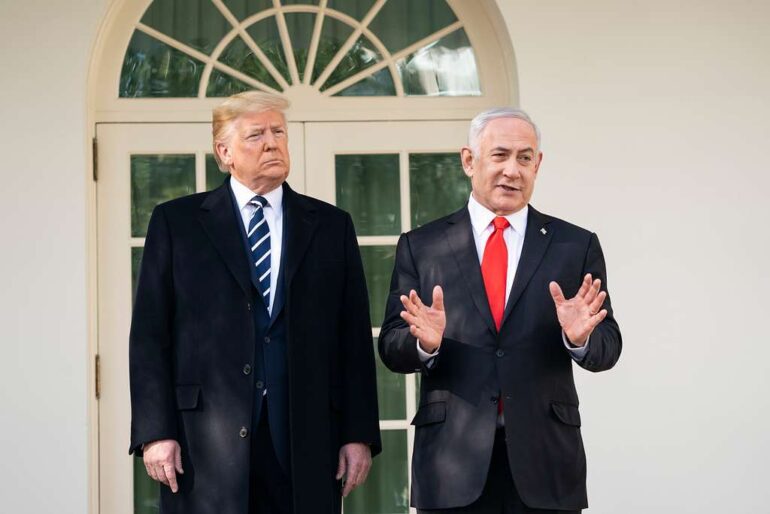
The Israeli cabinet voted early Friday morning in favor of United States President Donald Trump‘s ceasefire deal that will see Israeli hostages freed by Hamas in exchange for Palestinian security prisoners, as well as a halt to the fighting in Gaza.
According to the deal, Israeli forces will withdraw to new lines inside Gaza and Hamas must then release all living hostages within a 72 hour period.
Feelings of intense euphoria, and even some spontaneous street celebrations, have been sweeping across Israel in response to the news. But not everyone has bought into the narrative that this agreement benefits Israel.
Israeli Perspectives on the Deal
While most of the Israeli media has been promoting the deal as a great triumph for the nation, Channel 12 journalist Amit Segal took a more nuanced approach on Thursday, stating that this agreement is simply a hostage deal with none of the broader issues from the new Trump plan appearing in the text.
Segal acted to reassure those nervous about the deal that it won’t likely move passed the first phase, stressing that this is purely about hostages and a temporary ceasefire and that all talk about “international oversight” and “Tony Blair running Gaza” is absent from the agreement.
Most local journalists have put an even more positive – even celebratory – spin on the agreement, centering the fact that the hostages will return and that two difficult years of war will finally end with Israel appearing to achieve its official war aims.
But Arab affairs commentator Zvi Yeḥezkeli warned Friday morning that while the return of hostages provides Israel with great joy and relief, this first phase of the Trump plan has already given substantial advantages to Hamas at Israel’s expense.
“This morning we were informed that the hostages are returning and there is no greater joy,” he said.
“Now we need to view the agreement from the enemies’ perspective. What are its implications? The first stage is clear: the release of all our hostages and the bodies of the fallen, two years after they were abducted — and, on the other hand, a massive exchange: 250 prisoners serving life sentences and another 1,700 detainees. That is a critical boost to terrorism.”
Yeḥezkeli emphasized that Hamas is now able to claim that it “freed the maximum number of prisoners, stopped the war, remains armed and remains the authority in Gaza,” which were its core objectives.
He further noted that Hamas didn’t surrender, didn’t disarm, and will likely continue to rule Gaza even if Trump’s International Stabilization Force (ISF) is deployed to the strip.
Other critics of the deal, especially those who had hoped to see the war end with Hamas completely dismantled and Gaza under permanent Israeli control, are lamenting not only the fact that Hamas will remain in control of Gaza but also that Israel is being forced to withdraw from much of the territory regained through so much sacrifice.
Many trace the catastrophic Hamas attacks of October 7, 2023 to not only the failed “konceptsia” that dominated the thinking of Israel’s security establishment for over two decades, but also the 2005 Gaza Disengagement, in which US President George W. Bush forced Israel to surrender Gaza and destroy the over 20 Jewish communities in the strip (plus four in the northern West Bank).
From this perspective, Israel must retain control over Gaza – not only as the surest means to secure Israel’s south but also to correct the injustice of the Disengagement policy. Trump now forcing Israel to once again surrender Gaza, while leaving Hamas intact, is causing a significant number of Israelis – especially the sector that’s shouldered the brunt of this war – to feel that their sacrifices have been in vain.
But despite the many problematic elements of the agreement, it’s easy for most Israelis to see it in a positive light – especially given the fact that we’re being told to assume that Trump’s plan will end after the completion of phase one. From this perspective, Israel gets the hostages back, depriving Hamas of its primary leverage, while maintaining military control over more than half of Gaza.
While it’s true that Israel must release battle-hardened Hamas commanders in the process, this could matter less than many fear if Trump’s plan stops after the first phase and Israeli forces continue to operate in Gaza. In such a scenario, Israel would likely eliminate those released commanders at some point in the near future.
But this is of course based on the assumption that Trump won’t pressure Israel to advance to the second phase of his plan – an assumption that shouldn’t be taken for granted.
Netanyahu’s Ambiguous Intensions
The deal signed Friday morning also call into question Prime Minister Binyamin Netanyahu’s true intentions throughout the war.
Vision Magazine has maintained the position that Netanyahu had for a long time avoided a “day after” plan because he truly intended for Israel to permanently retake Gaza and reverse the Disengagement.
Does the prime minister touting this deal as an Israeli victory and using it to strengthen his own domestic political position undermine this analysis? Or is he simply making the best of a bad situation after being strong armed by Trump to accept a deal he didn’t want?
While it’s clear that Netanyahu aimed to incapacitate Hamas and to prevent the Fatah-led Palestinian Authority from ruling Gaza, his actual intentions regarding Israel retaking the strip has been ambiguous.
While an argument can be made that the prime minister’s strategy has been to avoid personally stating this goal while creating the conditions for permanent Israeli control of Gaza to become the war’s easiest “unintentional” default result and allowing senior ministers in his coalition to speak openly about reversing the Disengagement, one could counter this line of thinking by pointing out that Netanyahu has neglected to create the conditions that would make such a policy viable and internationally viable.
Had the prime minister truly intended to maintain control over Gaza, he would have likely taken the initiative on issues that serve as key points of leverage for Washington to weaponize against a permanent Israeli presence in the strip. If Netanyahu would have been serious about Israel keeping Gaza, he should have taken direct responsibility for the distribution of food and medicine, presented a plan for rebuilding Gaza after the war, and put greater effort into separating Hamas from the broader Gazan population.
Prime Minister Netanyahu should have enough wisdom and experience to know that Israel retaking Gaza requires him to present an independent strategic initiative that addresses all key issues pertaining to security, rebuilding, and the humanitarian needs of the local population.
There is some indication that this was attempted – especially in regards to empowering select Palestinian clans and militias against Hamas. But these efforts ultimately failed, either because Netanyahu lacked a clear vision for where they should lead or because Israel’s top military brass constantly undermined them.
Assuming that Netanyahu has in fact sought for Israel to retake Gaza but didn’t take the necessary steps to create the conditions to make this viable (thus leaving Israel exposed to the Trump plan), there are two likely obstacles that the prime minister may have seen to be preventing such initiatives:
1. He doesn’t believe any US president – including Trump – would agree to permanent Israeli control over Gaza (but thinks the Americans could passively accept such an outcome it if it were to gradually develop “unintentionally” over time).
2. He knows that his coalition partners most enthusiastic about Gaza being restored to Israel and rebuilding the Jewish communities destroyed in 2005 are also the partners most vehemently opposed to any moves that would benefit or aid a population that they identify as a bitter enemy (grossly mistreating the Israeli hostages held in Gaza). Entertaining fantasies about getting rid of Palestinians instead of taking responsibility for providing them with a better future is arguably the second greatest obstacle (after US pressure) to Israel applying full sovereignty over not only Gaza but also the West Bank.
Regardless of the reason (both of the above can be true), Netanyahu did not create a viable plan for retaking Gaza and has now been forced to sign onto Trump’s plan.
The Next Move
Trump is expected to arrive in Israel early next week.
With significant support from the international and Israeli press, the president is presenting his plan as an Israeli victory that he’s gifting Jerusalem. And he’s attaching increased regional cooperation and integration as a natural outgrowth of his initiative – even suggesting the expansion of the Abraham Accords to include Iran.
The danger of this expanded Abraham Accords – a regional architecture for West Asia built around Washington’s imperialist interests – is that it forces Israel to share space with existential enemies under the threat of losing US support instead of allowing Israel to naturally emerge as a leader in the region that can function independently of the Americans.
While it appears that this first phase of the Trump plan is a done deal and that we should anticipate the return of our hostages before the second anniversary of their abduction (according to our calendar), we should also hope that our prime minister is already cooking up ideas for outmaneuvering Trump, stopping this plan from reaching its second phase, and shaking Israel free from the Abraham Accords.





ISRAEL NEEDS TO TAKE CARE OF GAZA,,,ITS THE ONLY WAY TO HAVE PEACE. GOD GAVE THIS LAND TO ISRAEL AND NATIONS THINK THEY CAN TAKE IT AWAY AND PUT IN THIER OWN PEOPLE. WILL NOT WORK, LOOK AT HISTORY…ISRAEL IS A PEACFUL NATION.LET THEM LIVE ON THIER OWN LAND GOD GAVE THEM,,,,NO ONE HAS A RIGHT TO TAKE WHAT IS THIERS. WHY ARE THE ARAB NATIONS SO JEALOUS OF ISRAEL? ONE CAN TRULY SEE IT. HOPE EVEIL HAMAS WILL BE TAKEN OUT AS THEY LIKE DEATH AND NOT LIFE..FOR PEACE SAKE HAMAS HAS TO BE TAKEN ALL OUT…THEN ONE CAN HAVE PEACE,,,,AND A MORAL WORLD.