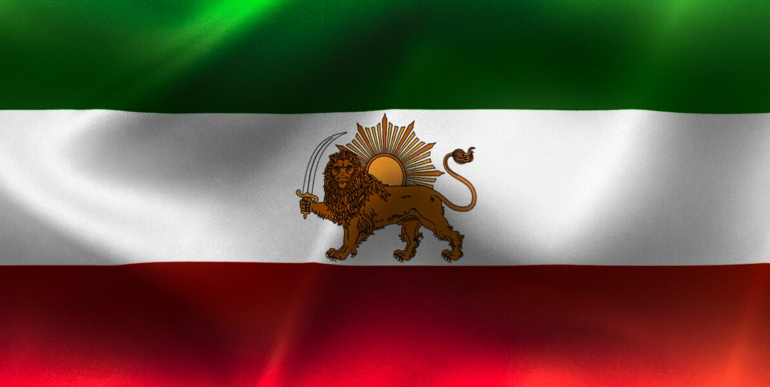
Another protest movement in the Islamic Republic of Iran has been dominating Western headlines, with United States President Donald Trump openly egging the protestors on in anticipation for the reemergence of the pre-revolution pro-West Iran.
This has been especially exciting for many Israelis and our supporters abroad who tend to understand the geopolitical map West Asia in terms of which actors have embraced modernity, accepted Israel’s existence, and rejected “extremist” ideologies.
But this outlook, based on Orientalist biases and colonial logic, is problematic for a couple of reasons.
First is the underlying assumption that the crown prince, Reza Pahlavi, is the rightful leader of Iran – even if only symbolically – and that most Iranians genuinely hope to integrate their society into the American-led West.
This assumption claims that should the regime of Ayatollah Khamenei fall, an Iranian leadership friendlier to Washington (and Jerusalem) would emerge with popular support. This shouldn’t be taken for granted.
The second matter is the very thin line between pining for the days of a liberal Iran (or Algeria or Afghanistan for that matter) and wanting to see the country and its natural resources come under the control of US imperialism.
Israelis hoping for the return of the Shah regime in Tehran are actually telling on themselves. The Shah’s very position, a British colonial creation, enabled the extraction of his country’s oil by Western corporations for decades.
Even if the current regime has fallen out of favor with the Iranian people , the Shah is still remembered by many as an oppressive imperialist puppet.
While Jews have good reason to want the Ayatollah’s regime to fall, calling for a return to something resembling Iran under the Shah is essentially calling for an Iran dominated by the interests of Western oil companies. What few Israelis seem to appreciate is that while cheering on the protestors and calling for regime change in Tehran might appear to carry short-term benefit, positioning Israel as a pro-West actor in the region actually reinforces the anti-Zionist depiction of Israel as a malicious alien presence in the region.
This wouldn’t be so frustrating if elements of the “Hasbara Industry” didn’t clumsily espouse anti-colonial catch phrases while expressing a colonialist mentality and supporting strong American involvement in West Asia.
If Israelis – especially our ruling class – could break free of the Western-centrist mentality that permeates our dominant institutions, we would actually have a lot to offer the region – and even the Islamic world more broadly. But any support we extend to the Iranian protestors right now could only be interpreted as helping Trump destabilize the Islamic Republic to advance US interests.
An Israel that acts in real solidarity with the Iranian people wouldn’t express support for reinstating the Shah but would call for returning the country to the policies of Prime Minister Mohammad Mosaddegh – ousted by the US and Britain in 1953 for working to nationalize Iran’s oil.
Support for a free and democratic Iran that resists imperialism, doesn’t threaten Israel, and uses its natural resources to benefit its own people would be the position most in line with Sternist principles. When France tightened its grip on Algeria, Sternist political leader Natan Yellin-Mor defied Jerusalem’s alliance with Paris and publicly supported the Algerian National Liberation Front.
Only by aligning ourselves with figures that both truly represent the interests of their people and share our vision for a Semitic region free from imperialist agendas can Israel emerge as a real leader in West Asia.